LightBlog

mardi 25 août 2020

Learn‌ ‌How‌ ‌to‌ ‌Collaborate‌ ‌Remotely‌ ‌With‌ ‌This‌ ‌$20‌ ‌Microsoft‌ ‌Teams‌ ‌Training‌ ‌

Over the past few months, many businesses have switched to remote working. In that time, Microsoft Teams has quickly become the favorite tool for teams who need to collaborate digitally. The Essential 2020 Microsoft Teams Training Course helps you understand this platform and improve your WFH skills, with 94 video tutorials. You can get the training now for just $19.99 at the XDA Developers Depot.

https://player.vimeo.com/video/410956439

Until the spring of this year, most of us had never even heard of Microsoft Teams. But now that water cooler chats and boardroom meetings are a thing of the past, remote collaboration skills are highly valuable.

This course helps you handle Teams like a pro, with 3.5 hours of training. Through concise video tutorials, you discover how to download, install, and set up the app. You then learn how to create your first group, manage members and channels, host video calls, and post messages.

The course also gives you a tour of the admin settings and dives into some useful features, such as meeting notes.

Of course, not everything happens through Teams. To help you handle email better, the training includes 6.5 hours on Outlook. These tutorials cover a range of time-saving skills, from keyboard shortcuts to creating appointments.

The training has a total rating of 4.3 stars, and your instructor is an experienced IT professional.

Worth $174 in total, the course and additional training is now only $19.99.
 
The Essential 2020 Microsoft Teams Training Course – $19.99

See Deal

Prices subject to change 

The post Learn‌ ‌How‌ ‌to‌ ‌Collaborate‌ ‌Remotely‌ ‌With‌ ‌This‌ ‌$20‌ ‌Microsoft‌ ‌Teams‌ ‌Training‌ ‌ appeared first on xda-developers.


from xda-developers https://ift.tt/3aT2gTT
via IFTTT

OPPO A53 with Qualcomm Snapdragon 460, 5000mAh battery launched in India for ₹12,990 (~$175)

Earlier this month, we learned that Chinese OEM OPPO was planning on launching a Snapdragon 460-powered device called the OPPO A53. The leaked specifications also revealed that the device would feature a 6.5-inch 90Hz LCD display with a hole-punch cutout, a triple camera setup with a 13MP primary sensor, a 16MP selfie shooter, a massive 5,000mAh battery, and a rear-mounted fingerprint sensor. Today, OPPO launched the device in the Indian market and we can now confirm that the leaked specifications were completely accurate.

OPPO A53: Specifications

Specification OPPO A53
Dimensions & Weight
  • 16.39×7.51×0.84cm
  • 186g
Display
  • 6.5-inch HD+ LCD
  • 1600×720
  • 90Hz refresh rate
  • 120Hz touch sampling rate
  • 89.2% screen-to-body ratio
SoC Qualcomm Snapdragon 460
RAM & Storage
  • 4GB LPDDR4x + 64GB UFS2.1
  • 6GB+128GB
  • microSD card expansion slot with support for up to 256GB cards
Battery & Charging
  • 5,000mAh
  • 18W wired fast charging
Fingerprint sensor
  • Rear-mounted
Rear Camera
  • 13MP f/2.2 primary camera
  • 2MP f/2.4 macro lens
  • 2MP f/2.4 depth sensor
Front Camera
  • 16MP f/2.0
Other Features
  • Wi-Fi 802.11 a//b/g/n/ac
  • Bluetooth 5.0
  • USB Type-C
Android Version ColorOS 7.2 based on Android 10

The new OPPO A53 is the first device to feature Qualcomm’s Snapdragon 460 SoC, which was announced earlier this year in January. The budget-friendly device packs in a 6.5-inch HD+ LCD display with a resolution of 1600×720 pixels, 90Hz refresh rate, 120Hz touch sampling rate, and a 89.2% screen-to-body ratio. The display has minimal bezels on either side, a chunky chin, and a hole-punch cutout in the top left corner for the selfie camera.

OPPO A53 color variants

The Snapdragon 460 SoC on the device is accompanied by either 4GB or 6GB of LPDDR4x RAM, coupled with 64GB or 128GB of UFS2.1 storage. In the camera department, the device packs in a triple camera setup on the back with a 13MP f/2.2 primary camera, a 2MP depth sensor, and a 2MP macro lens. Over on the front, the device has a 16MP f/2.0 selfie camera. Powering the device is a 5,000 mAh battery, which features support for 18W fast charging. On the software front, the OPPO A53 runs ColorOS 7.2 based on Android 10.

Along with the new OPPO A53, the company has also launched the OPPO Power Bank 2 in the Indian market, which packs in a 10,000mAh battery. The power bank is capable of 18W fast charging and it features a low-current charging mode for accessories.

Pricing & Availability

As mentioned earlier, the OPPO A53 comes in two RAM/storage variants. The variants have been priced as follows:

  • 4GB+64GB: ₹12,990 (~$175)
  • 6GB+128GB: ₹15,490 (~$209)

The device will be available in three color variants — Electric Black, Fairy White, and Fancy Blue — and it will go on sale starting today via Flipkart. The OPPO Power Bank 2 has been priced at ₹1,299 (~$18) and it will also be available on Flipkart starting today.

The company has announced a couple of launch offers for early buyers, including 10% instant discount for SBI card users, complete mobile protection for ₹1, buyback guarantee up to 70% at ₹99, and a bundle offer for the power bank that drops its price to ₹899 when purchased with an OPPO A53.

Buy the OPPO A53 from Flipkart

The post OPPO A53 with Qualcomm Snapdragon 460, 5000mAh battery launched in India for ₹12,990 (~$175) appeared first on xda-developers.


from xda-developers https://ift.tt/3b1mb2X
via IFTTT

Google will no longer offer Playground AR stickers on future Pixel phones, starting with the Pixel 4a

The Google Camera app on Pixel devices is home to a bunch of cool features, including Playground AR stickers that let you add animated augmented reality stickers to your photos and videos. Google introduced AR stickers to its Pixel lineup all the way back in 2017 and, since then, all Pixel devices have had the feature in the camera app. However, the company’s latest smartphone, the Pixel 4a, doesn’t include the Playground mode in the camera app. According to a recent report from 9to5Google, Google has confirmed that the absence of Playground mode on the Pixel 4a is intended and that the company plans to drop the feature from future Pixel devices.

In a statement to the publication, Google said, “We’re continuing to bring ARCore and its latest features to Pixel 4a and the many other ARCore-enabled devices. Playground will still be supported on earlier Pixel devices and we’ll focus our efforts on building great AR experience that serve a much wider audience.” While the Playground mode will be available on older Pixel devices, the number of available sticker packs has dropped down considerably. The publication reveals that most of the noteworthy sticker packs from Marvel, Star Wars, Stranger Things, Detective Pikachu, and more are no longer available on the Play Store, and users are just left with the Google sticker packs.

For the unaware, the Playground AR stickers in the Google Camera app on Pixel devices lets you spice up your photos and videos with animated “Playmoji”. The mode brings up a separate interface on the app which features a sticker button that brings up a list of available sticker packs. The company offers a wide variety of Playmoji for the feature and it also offers 2D stickers and floating signs with custom messages that you can easily add to your images.


Via: 9to5Google

The post Google will no longer offer Playground AR stickers on future Pixel phones, starting with the Pixel 4a appeared first on xda-developers.


from xda-developers https://ift.tt/2FVuVMF
via IFTTT

lundi 24 août 2020

HMD Global launches Nokia 5.3 and Nokia C3 in India

Finnish startup, HMD Global, resurrected the Nokia brand in December 2016 and since then, the company has been going strong with its extensive lineup of Android smartphones and features phones. Back in March, HMD unveiled its fourth generation of devices — categorized by the “x.3” moniker, including the Nokia 8.3, Nokia 5.3, and Nokia 1.3. Now, the company brings the Nokia 5.3 to India while also debuting the new entry-level Nokia C3 in the region for global availability.

Nokia 5.3

The Nokia 5.3 is a camera-centric smartphone for the lower-mid-range. The device features quad cameras on the back, including a 13MP primary camera, a 5MP ultra-wide-angle camera, a 2MP macro camera, and a 2MP depth sensor. Just like its predecessor — Nokia 5.1 Plus, the Nokia 5.3 comes with an HD+ display but with a narrower notch. It runs on Qualcomm’s Snapdragon 665 mobile platform with options between 4GB and 6GB of RAM.

nokia 5.3 5 dot 3 snapdragon 665

Like most other Nokia branded smartphones, the Nokia 5.3 is part of Google’s Android One program and comes with the guarantee of at least two years of OS updates. The phone comes with Android 10 out of the box and will receive updates to Android 11 as well as Android 12 (or whatever Google calls it). Lastly, the smartphone features a 4000mAh battery and comes with a 10W charger.

The Nokia 5.3 will be available in India only via online channels, including Amazon and Nokia’s online store from September 1st. Users interested in buying can pre-book the device starting today i.e. August 25th. The 4GB/64GB variant of the smartphone is priced at ₹13,999 while the 6GB/64GB variant comes for ₹15,499.

Nokia 5.3 Specifications

  • 6.55-inch (720 x 1600 pixels) HD+ 20:9 2.5D curved glass display
  • Octa-Core Snapdragon 665
    • 11nm Mobile Platform (Quad 2GHz Kryo 260 + Quad 1.8GHz Kryo 260 CPUs)
    • Adreno 610 GPU
  • 4GB / 6GB RAM, 64GB/128GB storage, expandable memory up to 512GB
  • Android 10
  • Dual SIM
  • 13MP rear camera with f/1.8 aperture, LED flash, 5MP wide-angle camera, 2MP depth sensor and 2MP for macro
  • 8MP front-facing camera with f/2.0 aperture
  • Fingerprint sensor
  • 3.5 mm audio jack, FM Radio
  • Dimensions: 164.3 x 76.6 x 8.5mm; Weight: 185g
  • Dual 4G VoLTE, WiFi 802.11 ac (2.4GHz + 5GHz), Bluetooth 4.2, GPS + GLONASS, USB Type-C
  • 4000mAh with 10W charging

Nokia C3

Besides the Nokia 5.3, the new Nokia C3 entry-level smartphone was unveiled not just for India but for the global markets. The Nokia C3 comes with a 5.99″ HD+ display and is powered by an octa-core Unisoc chipset along with 2 or 3GB of RAM. It features a single 8MP camera on the back and a 5MP camera on the front. The smartphone also features a dedicated Google Assistant button on the sides and a capacitive fingerprint sensor on the back.

Nokia C3 uses a 3040mAh battery and supports 5W charging. It runs on Android 10 but HMD has not made any claims about updates on the device.

It will be available in India starting September 17th via Nokia’s online store and offline retail chains. The 2GB/16GB variant is priced at ₹7,499 while the 3GB/32GB variant comes for ₹8,999. With this, HMD is also offering a 1-year replacement guarantee such that any fault with the device (covered under the guarantee) will ensure that you get a new handset instead of a repaired one.

Nokia C3 Specifications

  • 5.99-inch (720 x 1600 pixels) HD+ 20:9 2.5D curved glass display
  • Octa-core Unisoc SC9863A SoC
    • Quad 1.6GHz ARM Cortex-A55 + Quad 1.2GHz ARM Cortex-A55 CPUs
    • IMG 8322 GPU
  • 2GB / 3GB RAM, 16GB/32GB storage, expandable memory up to 128GB
  • Android 10
  • Dual SIM
  • 8MP rear camera with f/2.8 aperture, LED flash
  • 5MP front-facing camera
  • Fingerprint sensor
  • 3.5 mm audio jack, FM Radio
  • Dimensions: 159.6 x 77 x 8.69mm; Weight 184.5g (with battery)
  • 4G LTE, WiFi 802.11 b/g/n, Bluetooth 4.2, GPS + A-GPS, Micro USB
  • 3040mAh with 5W charging

The post HMD Global launches Nokia 5.3 and Nokia C3 in India appeared first on xda-developers.


from xda-developers https://ift.tt/3hqdn9a
via IFTTT

Here are the countries using Google and Apple’s COVID-19 Contact Tracing API

SARS-CoV-2, also known colloquially as just the coronavirus, has wreaked havoc across the world. Many countries shut down large parts of the economy in order to contain the spread of the virus. As countries reopen their economies, many health experts fear a “second wave”, ie. resurgence, of COVID-19. To prevent a second wave, public health experts are advocating that nations adopt contact tracing, ie. tracing all the people who have recently come into contact with a person who has tested positive for COVID-19 and then undertaking steps to isolate those individuals. Contact tracing is difficult to implement correctly without violating an individual’s privacy. The threat to personal privacy was severe enough for Google and Apple to collaborate on an API that developers of public health agencies can use to implement app-based contact tracing solutions. This contact tracing API, which Google and Apple call the Exposure Notification API, is designed to respect user privacy and security.

Once a user downloads an app that uses the Exposure Notification API and opts in to contact tracing, their device starts generating “proximity identifiers” that are changed every 15 minutes (on average). Via Bluetooth Low Energy, these “proximity identifiers” are periodically shared with nearby devices whose users have also opted into contact tracing. The proximity identifier is then processed on-device and does not reveal information about a user’s location or other personally identifiable information. Once a user confirms a positive diagnosis of COVID-19, they can share their diagnosis with the app they installed, which will then inform other users who have come into close contact with them in the last 14 days. For more information on how the Exposure Notification API works, we recommend reading our initial coverage.

Google first rolled out the Exposure Notification API for Android devices on May 20, 2020, as part of an update to Google Play Services, but its use is restricted to apps that have been developed by official public health agencies (for obvious reasons). However, neither Google nor Apple has made details public about the list of apps that have been whitelisted for using this API, so unless you’re constantly keeping up with the news, it’s hard to know which countries have adopted the API. We’ve previously covered some of the countries that have adopted the Exposure Notification API when we talked about the various open-source contact tracing projects that are out there. In this article, we have compiled a list of official contact tracing apps from designated health agencies from various countries that are using Google and Apple’s Exposure Notification API. Our list contains COVID-19 contact tracing apps that have been released or are currently in development.

We discovered Google’s hidden whitelist of application package names for the API. Subsequently, these package names were traced back to apps, their listing, and the countries they belong to. The information is compiled below in a table for easy reference. We have also added Google Play Store and Apple App Store links, if the app has been publicly released, as well as the source code and the official website link, wherever available. We will update the following tables as more countries/regions adopt the API.

Table Changelogs

  • June 26, 2020
    • Added: Brazil, Ghana, Ecuador, Spain, Estonia, Egypt, Portugal, Croatia, MIT’s PathCheck SafePlaces
    • Package names updated: Canada, Alabama
  • June 29, 2020
    • Updated Ireland’s listing to include the source code
    • Added the name and package name of Spain’s app.
    • Google has updated the package name “eg.nc.moh.bruhealthtrace” to “egnc.moh.bruhealthtrace.” This matches the “BruHealth” contact tracing app from the government of “Brunei.” We have updated the table accordingly.
  • June 30, 2020
    • Added Spain’s Radar COVID app
  • July 1, 2020
    • Fixed Japan’s listing to reflect that COCOA – COVID-19 Contact App has already been released.
    • Added a separate table for open contact tracing implementations based on Google and Apple’s Exposure Notification API. PathCheck SafePlaces was moved to this table and COVID Shield and Common Circle were added.
  • July 6, 2020
    • Ireland’s COVID Tracker app has been released on Google Play and the Apple App Store, so the listing in the table has been updated with links to reflect that.
  • July 8, 2020
    • Added: North Ireland, the Netherlands (second app), Finland, and MITRE’s COVID Aware app
  • July 15, 2020
    • Added: Arizona, CV Key
    • Updated: New Canadian app, package names for UK apps, Mexican app, updated Ghana –> Gibraltar
  • July 22, 2020
    • Added: Nevada (?) pending verification
  • August 5, 2020
    • Added: Belgium (In-Development), New York (In-Development)
    • Updated: Virginia (Released), North Dakota (In-Development), Canada (Released), Croatia (Released), Ecuador (Released), Northern Ireland (Released)
  • August 10, 2020
    • Added: Slovenia, Arizona, South Africa (?) pending verification
    • Re-verified that released apps are using COVID-19 ENS.
  • August 13, 2020
    • Updated: United Kingdom (Released)
  • August 24, 2020
    • Added: Czech Republic (In-Development), Michigan (In-Development), North Carolina (In-Development), Pennsylvania (In-Development), Scotland (In-Development), Kazakhstan (In-Development)
    • Updated: Spain (now using ENS), Estonia (Released), Netherlands (Released), Slovenia (Released), Alabama (Released), Nevada (Released), North Dakota & Wyoming (Released)

Regions with COVID-19 contact tracing apps based on the Exposure Notifications System (ENS)

Region App Name Android Package Name Status Useful Links
Australia COVIDTrace au.gov.dta.covidtrace In-Development
Austria Stopp Corona at.roteskreuz.stopcorona Released
Belgium be.sciensano.coronalert In-Development
Brazil Coronavirus – SUS br.gov.datasus.guardioes Released
Brunei BruHealth egnc.moh.bruhealthtrace Testing ENS
Canada COVID Alert ca.gc.hcsc.canada.stopcovid Released
Croatia Stop COVID-19 hr.miz.evidencijakontakata Released
Czech Republic eRouška cz.covid19cz.erouska.dev In-Development
Denmark Smittestop com.netcompany.smittestop_exposure_notification Released
Ecuador ASI ec.gob.asi.android Released
Estonia Hoia ee.tehik.hoia Released
Finland Koronavilkku fi.thl.koronahaavi In-Development
Germany Corona-Warn-App de.rki.coronawarnapp Released
Gibraltar Beat Covid Gibraltar com.gha.covid.tracker Released
Ireland Covid Tracker com.covidtracker.hse Released
Italy Immuni it.ministerodellasalute.immuni Released
Japan COCOA – COVID-19 Contact App jp.go.mhlw.covid19radar Released
Kazakhstan eGov bizbirgemiz kz.nitec.bizbirgemiz In-Development
Kenya ke.go.health_togethertrace In-Development
Latvia Apturi Covid Latvia lv.spkc.gov.apturicovid Released
Malta? mt.gov.dp3t In-Development
Mexico COVID-19MX mx.gob.www Testing ENS
Netherlands CoronaMelder nl.rijksoverheid.en Released
Northern Ireland StopCOVID NI net.hscni.covidtracker Released
Philippines StaySafe PH ph.staysafe.mobileapp Testing ENS
Poland ProteGO Safe pl.gov.mc.protegosafe Released
Portugal STAYAWAY COVID fct.inesctec.stayaway In-Development
Saudi Arabia Tabaud sa.gov.nic.tabaud Released
Scotland gov.scot.covidtracker In-Development
Slovenia OstaniZdrav si.gov.ostanizdrav Released
South Africa COVIDConnect za.gov.health.covidconnect In-Development
Spain Radar COVID es.gob.radarcovid Released
Switzerland SwissCovid ch.admin.bag.dp3t Released
United Kingdom NHS COVID-19 uk.nhs.covid19.production Released
Uruguay Coronavirus UY uy.gub.salud.plancovid19uy Released
USA – Alabama GuideSafe gov.adph.exposurenotifications Released
USA – Arizona Covid Watch gov.azdhs.covidwatch.android Testing ENS
USA – Michigan gov.michigan.MiCovidExposure In-Development
USA – Nevada Covid Trace Nevada gov.nv.dhhs.en Released
USA – New York gov.ny.health.proximity In-Development
USA – North Carolina gov.nc.dhhs.exposurenotification In-Development
USA – Pennsylvania gov.pa.covidtracker In-Development
USA – North Dakota & Wyoming Care19 Alert com.proudcrowd.exposure Released
USA – South Carolina In-Development
USA – Virginia COVIDWise gov.vdh.exposurenotification Released

Note: A ? next to the region means we are unsure which region this app is being developed for.

Open COVID-19 contact tracing implementations based on the Exposure Notification API

Parties App Name Android Package Name Status Useful Links
CVKey Project CVKey org.cvkey.cvkey Testing ENS
MIT PathCheck SafePlaces org.pathcheck.covidsafepathsbt.mn Testing ENS
MITRE Corporation COVID Aware org.mitre.covidaware In-Development
Shopify Volunteers COVID Shield app.covidshield In-Development
University of Washington School of Medicine Common Circle edu.uw.commoncircle.research

edu.uw.commoncircle.exposures

In-Development

In-Development


Thanks to PNF Software for providing us a license to use JEB Decompiler, a professional-grade reverse engineering tool for Android applications.

The post Here are the countries using Google and Apple’s COVID-19 Contact Tracing API appeared first on xda-developers.


from xda-developers https://ift.tt/2YC0UrS
via IFTTT

PUBG Mobile 1.0 launches September 8th with major performance fixes to reduce lag

PUBG Mobile is getting a major update to version 1.0 on September 8, and it’ll introduce a number of new features, including improved performance and an overhaul of visuals and gameplay.

The big 1.0 update to the popular battle royale shooter will feature improvements to players’ character models, particles, smoke, air blasts, muzzle flashes, and the addition of scope interaction. Environments will look different, too, with improved graphics for vegetation, water, and more. Meanwhile, PUBG Mobile 1.0 will introduce an overhaul to some gameplay elements, including parachuting, sprinting, throwing, and “other key actions.” The 1.0 update will also bring up to a 30% increase in frame rate and a 76% decrease in lag, depending on which hardware you’re using. 90fps gameplay is currently exclusive to OnePlus phones until September 6, 2020, so the new version may also unlock higher fps gameplay on other high-spec devices.

In addition, Tencent Games also announced PUBG Mobile World League (PMWL) and World Championship will combine into PUBG Mobile Global Championship (PMGC). PMGC will bring teams together from the Americas, Europe, South Asia, Southeast Asia, the Middle East, and China to compete for a prize pool of $2 million. Due to the ongoing COVID-19 pandemic, however, Tencent Games said it’s not sure if fans will be able to attend in person, but if things improve, fans will be invited to the event, which takes place in November.

PUBG Mobile 1.0 changelog


Since its release on Android and iOS, PUBG Mobile has amassed more than 600 million downloads with 50 million daily active players, excluding mainland China. In China, the game is known as “Game for Peace” and has also amassed a significant player base. It may no longer be the leading battle royale game on console and PC, but its mobile community is thriving.

PUBG Mobile 1.0 launches September 8, followed by PMGC starting late November.

PUBG MOBILE Nordic Map: Livik (Free+, Google Play) →

The post PUBG Mobile 1.0 launches September 8th with major performance fixes to reduce lag appeared first on xda-developers.


from xda-developers https://ift.tt/2Qnq0WU
via IFTTT

Microsoft Launcher v6 update enables landscape mode and new Feed design

Update 1 (08/24/2020 @ 08:35 PM ET): Microsoft Launcher 6.2 is now rolling out with the 4 new features we highlighted in the beta release. Scroll to the bottom for more information. The article as published on June 23, 2020, is preserved below.

Microsoft’s efforts in Android app development haven’t gone unnoticed in the Android community. The company has released and updated many of its applications and services for our favorite platform over the past couple of years. Microsoft Launcher, a home screen launcher replacement with over 10 million installs on the Google Play Store, is definitely one of the most notable ones. A new beta build of the upcoming major v6 update is now available (via AndroidPolice), and it adds a handful of welcome features.

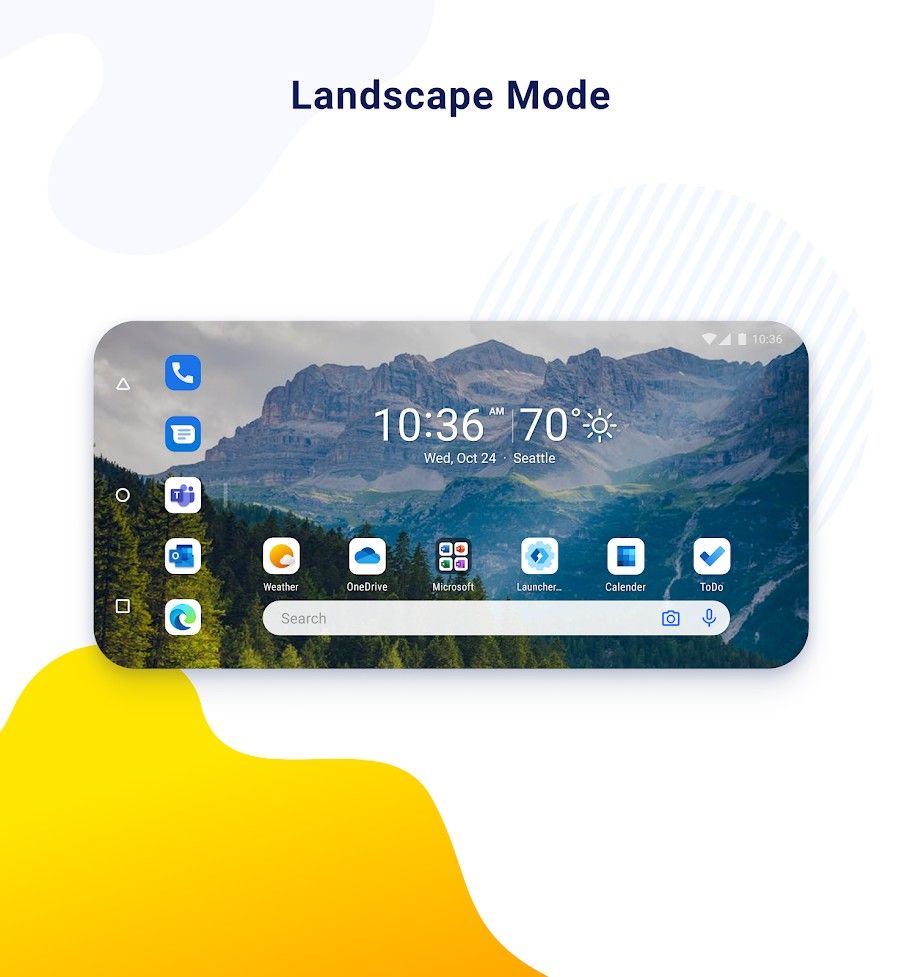
The first and most noticeable new feature is support for landscape mode. To be honest, I rarely ever hold my phone in horizontal mode, but I can see how a lot of people could make use of it. Many major launchers have had landscape mode support for a while. Even’s Google’s default Pixel Launcher lets you rotate the home screen. The changelog also hints that the launcher is now more memory-efficient. Both of these features have been available since the first preview build of Microsoft Launcher v6 from January.

The update also introduces a redesigned Microsoft Feed. For those who aren’t familiar, Feed sits on the minus one pane on your home screen, and it displays information from various Microsoft services. You can check out your schedule or just browse the news. Feed now features a blurred background and more even spacing between cards. You can also create folders in the app drawer and double-tap anywhere to lock the screen. Both of these features have been available since the last preview build.

Microsoft Launcher Microsoft Feed

Microsoft Launcher’s new Microsoft Feed design. Image credits: Kerry Wan/AndroidPolice.

Here’s the full changelog below if you’re interested:

Microsoft Launcher v6 beta changelog

• Support landscape mode
• Updated Microsoft Feed design
• Beautiful Wallpapers
• Improved performance

Fix in this build:
• Add up to 3 rows in Dock
• Organize your App Drawer with folders
• Double tap to lock screen
• Improved app search
• Fixed bugs and crashes

You can try out the new features by opting into the beta program on the Play Store.

Microsoft Launcher (Free, Google Play) →

Update: Microsoft Launcher 6.2 Stable

Microsoft Launcher 6.2.200706 is now rolling out on the Google Play Store, and it brings support for landscape mode and the updated Microsoft Feed design. You can download the stable release from APKMirror.

The post Microsoft Launcher v6 update enables landscape mode and new Feed design appeared first on xda-developers.


from xda-developers https://ift.tt/31dIAqS
via IFTTT